Key Points:
- Many autistic people do feel empathy, but they may express it differently from neurotypical individuals.
- Challenges in social communication can create misunderstandings about empathy in autism.
- Building understanding and support can help autistic individuals strengthen emotional connections.
When people ask, “Is lack of empathy a sign of autism?” they often do so out of confusion or frustration. A parent may wonder why their autistic child doesn’t react when someone is sad, or a teacher might misread a student’s quiet response as indifference. These moments can feel painful, especially when love and care seem unreturned. But beneath the surface, empathy in autism often exists. It just looks different.
Understanding empathy in autistic individuals isn’t about labeling them as “lacking.” It’s about learning how they perceive, process, and express emotions. This article dives into the nuances of empathy in autism, separating myths from reality, and offering insights that can foster compassion and connection.
What Does Empathy Really Mean?
Empathy is often misunderstood as a single trait, but it’s actually made up of several layers. Recognizing these layers helps us understand how autistic people experience empathy differently.
- Cognitive empathy is the ability to understand another person’s perspective, knowing what someone else might be thinking or feeling.
- Affective empathy refers to emotionally responding to someone else’s feelings, sharing in their joy or sadness.
- Compassionate empathy combines both understanding and care, motivating someone to help or comfort others.
When people assume that autistic individuals “lack empathy,” they often overlook how these components can develop unevenly. For instance, an autistic person might feel deep affective empathy but struggle with cognitive empathy, making it hard to show emotional understanding in expected ways.

The Double Empathy Problem
The “double empathy problem,” a term introduced by sociologist Damian Milton, reshapes how we think about empathy in autism. It suggests that misunderstandings go both ways between autistic and non-autistic people.
Autistic individuals might find it difficult to read neurotypical social cues, while neurotypical people often misinterpret the expressions or body language of autistic individuals. Neither group lacks empathy; they simply have different communication styles.
This mismatch can lead to painful misjudgments. For example:
- A child who doesn’t make eye contact when someone is crying might be perceived as “cold.” In reality, they may feel overwhelmed and unsure how to respond.
- An adult who doesn’t react quickly in conversation may be processing emotions internally, not ignoring others.
Recognizing this two-way challenge can reduce stigma and open up better ways of connecting.
Why Autistic People May Seem to Lack Empathy
Autistic individuals often care deeply about others, yet their empathy may not appear in typical ways. Here are some reasons why it may seem absent, even when it’s not.
1. Differences in Social Communication
Autism affects how people interpret facial expressions, tone of voice, and body language. A person might not instantly pick up on someone’s emotional state, leading others to assume they don’t care. But many autistic people later reflect deeply on those moments, often feeling guilt or sadness for not knowing how to respond at the time.
2. Sensory Overload and Emotional Regulation
In loud, bright, or emotionally charged environments, autistic people may become overstimulated. Their ability to show empathy might shut down temporarily as their brain prioritizes coping with sensory input. This isn’t emotional detachment, but self-preservation.
3. Expressing Empathy Differently
Some autistic people express empathy through actions rather than words. Instead of offering comfort verbally, they might fix a problem, share an object, or stay close quietly. These gestures are powerful expressions of care, even if they don’t fit social expectations.
4. Difficulty Reading Complex Emotions
Autistic individuals might have trouble recognizing subtle or mixed emotions, especially in group settings. They may understand clear feelings like happiness or sadness, but struggle with ambiguous ones like sarcasm or passive aggression.
What the Research Says
Scientific studies over the past decade have challenged the stereotype that autistic people lack empathy. Many show that empathy in autism is not absent but expressed differently.
One study in Nature Neuroscience found that autistic participants showed strong physiological responses, like increased heart rate and pupil dilation, when exposed to emotional situations. This indicates they felt empathy but might have had difficulty expressing it outwardly.
Another line of research reveals that autistic people often demonstrate higher levels of affective empathy, particularly toward animals or individuals who share similar experiences. This reinforces that empathy exists, it just might have a different focus or expression.
How to Recognize and Nurture Empathy in Autistic Individuals
Empathy can be nurtured and strengthened through understanding, patience, and communication strategies tailored to each person’s needs.
Create Safe Emotional Spaces
When autistic individuals feel judged or misunderstood, they may withdraw. Create an environment where they can express emotions freely without fear of criticism.
Use Clear Emotional Language
Avoid assuming someone knows what you’re feeling. Instead of saying “You should know I’m upset,” try saying, “I’m sad because of what happened.” Direct communication helps bridge emotional understanding.
Model Empathetic Behavior
Show empathy through small acts, listening, validating feelings, or sharing your own emotional experiences. These moments build a foundation for emotional learning.
Respect Sensory Boundaries
Sometimes, touch or eye contact may be uncomfortable. Find alternative ways to express care, like offering space, writing notes, or using shared interests to connect.
Encourage Emotional Literacy
Teaching autistic children and adults to identify and name emotions, both their own and others’, can strengthen emotional awareness and empathy. Visual tools, stories, and role-play can be particularly effective.
Common Myths About Autism and Empathy
Misinformation about empathy and autism contributes to stigma. Let’s address a few persistent myths.
Myth 1: Autistic People Don’t Feel Emotions
In reality, many autistic individuals experience emotions intensely. They might cry, laugh, or feel deeply moved by others’ suffering, but not always in socially expected ways.
Myth 2: Empathy Can’t Be Learned
Empathy is not fixed. With support and practice, autistic individuals can develop stronger social understanding. Applied Behavior Analysis (ABA) therapy and other interventions can help by teaching perspective-taking and emotional communication skills.
Myth 3: If Someone Doesn’t Show Empathy, They Don’t Care
Behavior doesn’t always reveal internal feelings. What appears as indifference may actually be confusion, overwhelm, or a delayed emotional response.
The Emotional Strengths of Autistic People
Empathy in autism can also show up as deep loyalty, fairness, and compassion. Many autistic individuals are known for their honesty and moral clarity. They may express empathy by advocating for others, standing up against injustice, or caring for animals.
These strengths often go unnoticed because they differ from conventional displays of empathy. Recognizing and valuing these expressions helps build mutual respect and inclusion.
Bringing Understanding into Everyday Interactions
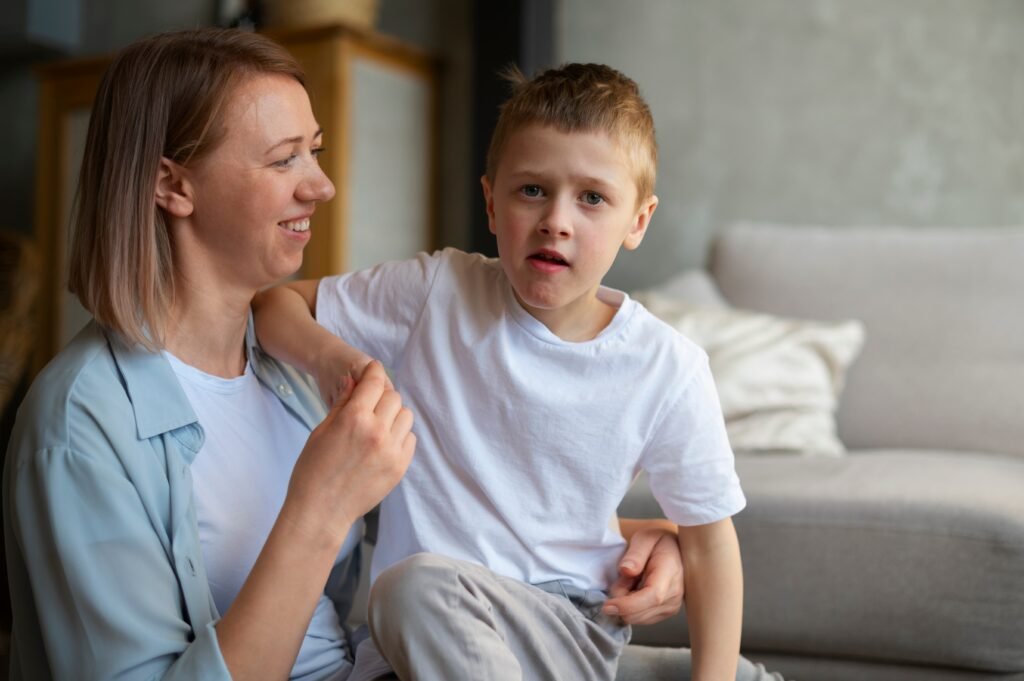
Parents, teachers, and peers play a major role in shaping how autistic individuals experience empathy. Small, consistent actions can create a big difference.
- Validate feelings instead of correcting them.
- Offer support through calm routines and visual cues.
- Give time for emotional processing before expecting a response.
- Celebrate small moments of connection – eye contact, shared laughter, or quiet companionship.
Over time, these practices can help autistic people feel more confident expressing empathy and responding to others’ emotions.
Finding Compassion on Both Sides
Empathy is a two-way street. Non-autistic people also need to practice understanding toward those on the spectrum. Learning to interpret their cues, whether that means appreciating silence, respecting boundaries, or noticing subtle signs of care, fosters more meaningful relationships.
When we redefine what empathy looks like, we make space for everyone to belong and feel understood.
So, do autistic people lack empathy? The truth is that most don’t. They feel, they care, and they connect, often in ways the world doesn’t always recognize. The challenge lies not in their capacity for empathy, but in bridging the gap between different ways of communicating it.
By embracing patience, clear communication, and compassion, we can build stronger emotional bridges that honor the full spectrum of human experience.
If you’re seeking ways to nurture empathy, social understanding, and emotional regulation in your child, Glow Forward offers professional Applied Behavior Analysis (ABA) therapy designed to meet individual needs. Through structured, compassionate guidance, ABA therapy helps autistic children build the skills to express empathy, communicate feelings, and connect meaningfully with others.
Whether you’re in Maryland or North Carolina, Glow Forward provides a supportive environment where every child can grow, learn, and build genuine emotional connections. Reach out today to take the next step toward understanding and progress.