Key Points:
- Empower Parents: Learn to reinforce ABA skills at home.
- Boost Independence: Support communication and daily living skills.
- Ensure Consistency: Apply strategies for faster, lasting progress.
What Is Parent ABA Therapy?
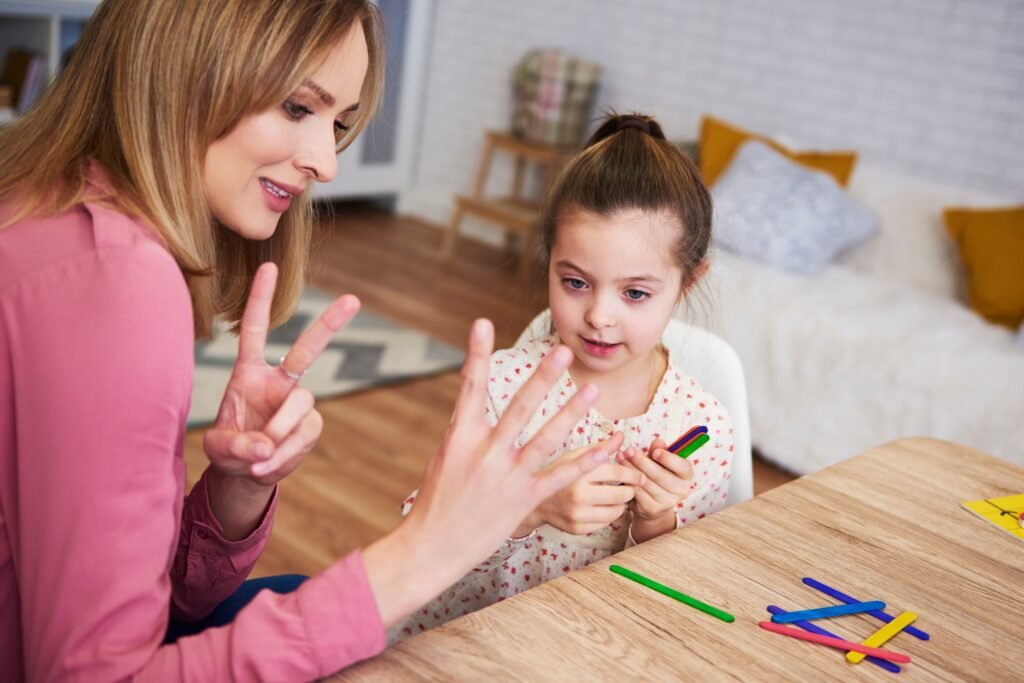
As your child learns independence in ABA therapy, do you know how to support that growth at home? Parent training can help you reinforce skills everywhere, turning everyday moments into learning opportunities while partnering in your child’s development.
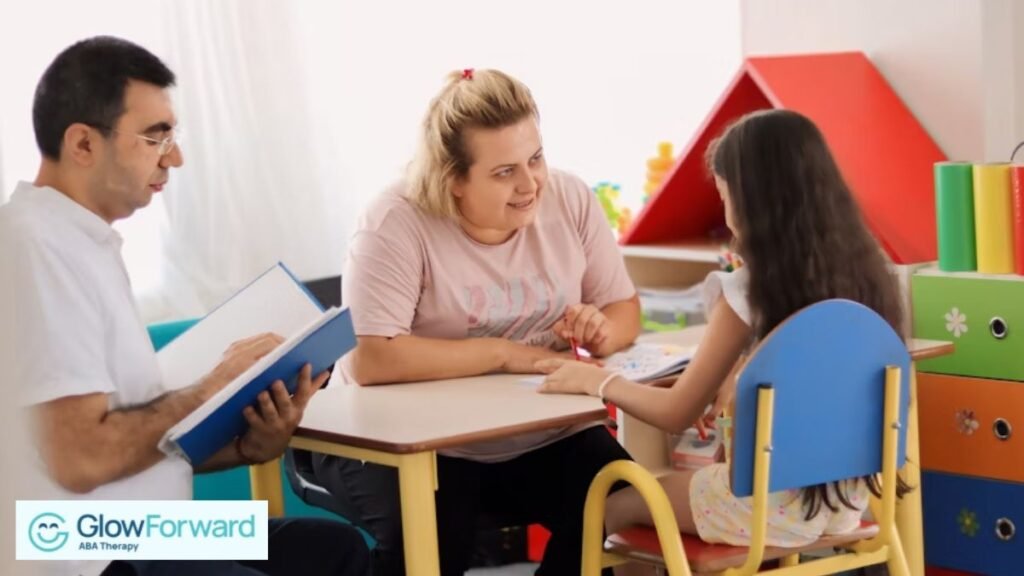
Parent ABA therapy, often called parent training or caregiver coaching, involves a Board Certified Behavior Analyst (BCBA) teaching parents to use Applied Behavior Analysis techniques at home.
This approach helps reinforce positive behaviors and reduce challenging ones. Parent training ensures consistency, accelerates child progress, improves communication, and empowers parents to manage behaviors in daily life.
As a parent or caregiver, you are your child’s first and most important teacher. At Glow Forward ABA, we believe that ABA parent training in North Carolina is essential for helping children with autism thrive.
Our programs are designed to give parents the knowledge, confidence, and practical tools to reinforce therapy at home, ensuring consistency and progress across all environments. Learn more about our parent training and support program.

What We Focus On During Parent Training
Our parent training programs in North Carolina and Maryland cover:
- Behavior Skills Training (BST): A structured process involving modeling (showing), rehearsal (practicing), and feedback.
- Consistency: Applying the same behavioral strategies at home that are used in clinical sessions.
- Positive Reinforcement: Using rewards to encourage desired behaviors.
- Goal Setting: Collaborating with professionals to set, track, and achieve actionable goals for the child.
- Skill Generalization: Helping children apply skills learned in therapy to real-world environments like home and school.
- Self-Care for Parents: Addressing caregiver burnout and fostering better mental health.
- Communication Training: Improving verbal and non-verbal interaction.
Parent training is considered vital for long-term success, reducing stress levels, and strengthening the parent-child bond.
Training is designed to be accessible to all parents, regardless of experience, and helps turn everyday moments into learning opportunities.

Do You Need ABA Parent Training?
ABA parent training is commonly recommended for:
- Parents of children with ASD: Enhance skill acquisition and social engagement.
- Caregivers facing challenging behaviors: Provides strategies to identify triggers and reduce negative behaviors.
- Families looking to increase consistency: Ensures ABA techniques are applied across settings (home, school, community).
- Parents of children with communication gaps: Improves functional communication and social skills.
- Those needing to build confidence and reduce stress: Strengthens the parent-child bond and reduces caregiver stress.
- Caregivers of children receiving behavioral therapy: Often a required component of effective ABA treatment.
- Isolation or social skill struggles: Difficulty playing with others, sharing, or taking turns.
- Safety awareness concerns: Lack of understanding of danger in the home or community.
- Repetitive or restrictive behaviors: Persistent repetitive movements or restricted interests affecting daily life.
Why Parent Training Matters
- Better Behavior Management: Parents gain practical tools and confidence to address challenging behaviors, such as tantrums or aggression, using positive reinforcement, reducing stress for the whole family.
- Skill Generalization: Children learn to apply skills taught in therapy to real-life situations, including home routines and community activities.
- Improved Communication and Social Skills: Parents are guided on how to support their child’s communication, helping them express needs and engage socially with others.
- Consistency for Faster Progress: Applying ABA strategies consistently at home helps children reach developmental milestones more quickly and sustainably.
- Stronger Parent-Child Bond: Understanding the reasons behind behaviors allows for more supportive, nurturing interactions, deepening the parent-child relationship.
- Daily Living Independence: Parents are trained to teach self-care and life skills, including toilet training, dressing, and other daily routines.

How Our Sessions Go: ABA Parent Training In Action: Requesting at Snack Time
Goal: Encourage independent verbal requests and reduce whining for snacks.
Environment: Home kitchen
- Step 1: Identify the Opportunity: The child wants crackers.
- Step 2: Environmental Arrangement: Place the cracker box on a shelf that the child can see but cannot reach.
- Step 3: Prompting: When the child points or whines, offer two choices (e.g., crackers or an apple) and wait for a specific communication attempt, such as saying “crack” or signing “more.”
- Step 4: Positive Reinforcement: As soon as the child attempts, immediately give the cracker and praise the communication: “Great job saying crackers!”
- Step 5: Fading Prompts: Over several days, gradually wait a little longer before offering prompts to encourage independent vocalization.
Other Common Home Teaching Strategies
- Modeling Language: Expand on words your child says. For example, if they say “ball,” respond with “Yes, red ball!”
- Visual Schedules: Use pictures to show daily tasks, like brushing teeth, to reduce anxiety and create a routine.
- Timers for Transitions: Set a timer for “5 more minutes of playtime” to make moving to the next activity easier.
- Daily Life Skills: Break tasks like sorting laundry or setting the table into small, manageable steps to build independence.
Parents can use these strategies to turn everyday moments into learning opportunities, reinforcing ABA techniques naturally at home.

We Make it Simple: 5-Step Parent Training Approach
ABA professionals often use this structure when coaching parents:
- Connect: Check in on progress and recent challenges.
- Review: Evaluate the previous week’s goals and successes.
- Teach/Model: Introduce a new strategy (e.g., using a timer for transitions).
- Practice: Parent tries the strategy in a real-life routine, such as snack time.
- Document: Record progress and note next steps for continued practice.
Find Our Comprehensive Parent Coaching Across NC: Your First Consultation is FREE
Our sessions focus on teaching parents evidence-based ABA strategies to integrate into daily routines.
Through hands-on guidance and modeling, parents learn how to:
- Implement positive reinforcement strategies effectively
- Reduce challenging behaviors
- Encourage communication, social, and daily living skills at home
We Teach You How to Reinforce ABA Strategies at Home in North Carolina
Consistency is key to ABA therapy success. Our expert team guides families on how to reinforce ABA at home in North Carolina, providing practical tips for everyday situations, from morning routines to social skills practice.
Parents interested in structured, supportive, and flexible learning can enroll in ABA parent training in NC with Glow Forward ABA. Programs are offered both in-person and via telehealth for families across North Carolina and Maryland. Families can also access in-home ABA therapy, telehealth services, and autism assessments with us.
Contact us today to schedule a free consultation: call +1 (888)-943-4684 or email: Hello@glowforwardaba.com

FAQs
1. What is ABA parent training, and how does it help my child?
ABA parent training, also called parent coaching or caregiver training, teaches parents to use Applied Behavior Analysis (ABA) techniques at home. It helps reinforce positive behaviors, reduce challenging behaviors, improve communication, and accelerate your child’s progress while empowering you to manage daily routines.
2. Who can benefit from parent ABA therapy?
Parent training is recommended for families of children with autism, especially those facing challenging behaviors, communication gaps, or difficulties with daily life skills. It also helps parents increase consistency across home, school, and community settings, strengthening the parent-child bond.
3. How do parent training sessions work?
Glow Forward ABA uses a 5-step approach: Connect, Review, Teach/Model, Practice, and Document. Parents learn strategies during real-life routines such as snack time, play, or daily tasks while receiving guidance, feedback, and step-by-step coaching from a BCBA.
4. Can I reinforce ABA strategies at home?
Yes! Parent training teaches practical methods to integrate ABA into daily life, from morning routines and chores to transitions and social skills practice. Consistent reinforcement at home supports faster progress and helps children generalize skills across environments.
5. What are some common strategies parents learn?
Parents learn techniques such as:
- Modeling language (expanding words like “ball” to “red ball”)
- Using visual schedules to structure daily routines
- Timers for transitions to reduce anxiety
- Breaking life skills tasks into small, manageable steps
6. Do you offer in-home and virtual training?
Yes! Glow Forward ABA offers flexible parent training programs across North Carolina and Maryland. Families can participate in in-home ABA sessions, telehealth coaching, or a combination of both for convenience and hands-on guidance.
7. How do I get started with ABA parent training in North Carolina?
Getting started is simple. You can enroll in ABA parent training NC with Glow Forward ABA or schedule a free consultation by calling +1 (888)-943-4684 or emailing Hello@glowforwardaba.com.
Our team will guide you through the next steps targeted to your child’s needs.