Key Points:
- Support for Parents and Caregivers: In Maryland and North Carolina, Glow Forward ABA Therapy helps parents and caregivers learn practical strategies to support their child’s growth at home.
- Hands-On ABA Training: Caregivers get guided, real-world tips to reinforce therapy every day and build confidence in managing behaviors from toileting to tantrums.
- Everyday Progress for Your Child: With parent training, children gain independence, improve communication, and develop lasting skills that extend beyond therapy sessions.

What is Parent Training in ABA Therapy?
Just got an autism diagnosis for your child? Wondering how you’ll cope and manage their needs? Parent training at Glow Forward ABA Therapy in Maryland and North Carolina can help, teaching evidence-based strategies to support your child’s growth and make daily life easier.
Applied Behavior Analysis (ABA) therapy is one of the most effective interventions for children with autism. While clinical sessions with a Board Certified Behavior Analyst (BCBA) are essential, parent training in ABA therapy ensures that skills learned in therapy carry over to everyday life. When caregivers are actively involved, children benefit from consistent reinforcement, faster progress, and increased independence.
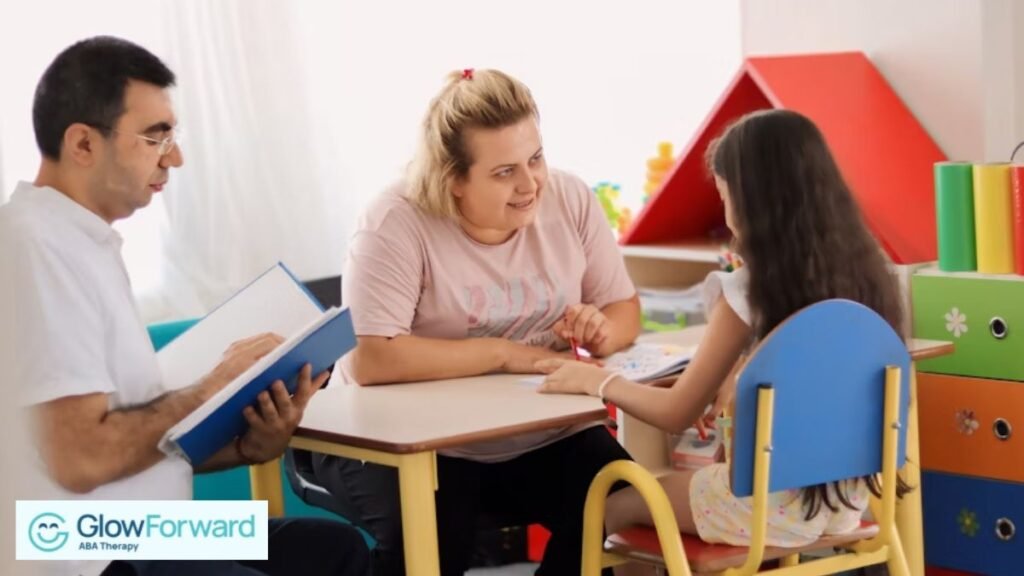
Our parent coaching programs empower families in Maryland and North Carolina to use ABA strategies at home. BCBAs guide parents and caregivers in applying these techniques during everyday routines. Through Behavioral Skills Training (BST), parents learn by:
- Instruction: Understanding the “why” and “how” of a technique.
- Modeling: Observing the BCBA demonstrate strategies with the child.
- Rehearsal: Practicing techniques under supervision.
- Feedback: Receiving real-time guidance to improve skills.
The goal is not perfection; it’s to build confidence and create meaningful progress for your child.

Who Benefits from Parent Training?
Caregiver training in autism therapy is ideal for:
- Parents of children currently enrolled in ABA therapy
- Families seeking guidance for children being assessed for autism
- Caregivers new to autism parent coaching or looking for structured support
Programs are flexible, offering in-home or telehealth sessions tailored to the family’s schedule and the child’s current therapy program.
Why ABA Parent Training at Home Matters
Parent training at home ensures that ABA therapy doesn’t stop when a session ends; it extends into daily life, helping children with autism achieve meaningful, lasting progress. Here’s why it’s so important:
1. Consistency and Faster Progress
When parents use the same strategies as therapists, children receive consistent, high-quality instruction. This alignment accelerates skill acquisition and helps children master new behaviors more quickly.
2. Generalization of Skills
Training empowers children to apply what they learn in therapy to real-world settings, home, school, and community, so skills become functional and practical.
3. Reduced Family Stress
Parents gain insight into the function of behaviors, which can reduce tantrums, meltdowns, and daily chaos during routines such as bedtime or mealtime.
4. Empowerment and Confidence
Parent training replaces guesswork with proven ABA strategies, giving caregivers the confidence to support their child’s development effectively.
5. Strengthens Relationships
Using positive behavioral approaches fosters a nurturing, supportive, and trusting bond between parent and child.
6. Long-Term Success
By building caregiver skills, families can maintain progress, promote independence, and ensure continued growth even after formal therapy sessions end.
In short: ABA parent training at home turns therapy into a 24/7 learning experience, making it one of the most powerful predictors of success for children with autism.

Parent Training Programs at Glow Forward ABA Therapy Include:
Programs like Glow Forward ABA in Maryland and North Carolina include a comprehensive, hands-on approach:
1. Assessment & Goal Setting
Your child’s BCBA completes a clinical assessment to identify communication, daily living skills, and behavior management challenges.
2. Behavioral Skills Training (BST)
BST is the core methodology, teaching parents to:
- Identify behavior triggers
- Implement positive reinforcement
- Use prompting and fading techniques
- Apply naturalistic teaching during daily routines
3. Practice in Real Life
Parents practice strategies in real scenarios, such as transitions, mealtime, or playtime, with guidance and feedback from the BCBA.
4. Data Collection & Review
Parents track progress, enabling the BCBA to adjust strategies for optimal results.
5. Ongoing Support
Training evolves with your child’s growth, ensuring parents are always prepared for the next developmental stage.

How Parent Coaching at Home With Glow Forward ABA Therapy in Maryland and North Carolina Works
Typical sessions are usually 30–60 minutes, weekly or biweekly. They are led by a Board Certified Behavior Analyst (BCBA) or supervised therapist.
Sessions are designed to fit into family routines, with a focus on coaching, modeling techniques, and reviewing progress.
Key steps in a session include:
- Modeling & Role-Play: The therapist demonstrates a strategy, such as prompting a child to complete a task, and the parent practices under guidance.
- Positive Reinforcement: Parents learn to immediately reward desired behaviors, whether it’s sharing a toy, following a request, or completing a daily routine.
- Prompting & Fading: Caregivers provide cues to help the child succeed and gradually reduce support to encourage independence.
- Behavior-Specific Praise: Parents replace general praise with specific feedback, e.g., “I love how you asked for the chips nicely!” to reinforce the exact behavior.
- Natural Environment Teaching: Learning occurs during real-life activities such as mealtime, playtime, or chores, rather than only at a therapy table.
Example: Teaching “Requesting” at Snack Time
Goal: Increase independent verbal requests or gestures.
Scenario:
- The parent places a favorite snack just out of reach.
- Child reaches and whines.
- Parent prompts: “Tell me, ‘Chips.’”
- Child says: “Chips.”
- Parent immediately provides a small piece of the snack and offers praise: “Great job asking!”
- The BCBA later coaches the parent to gradually fade the verbal prompt, shifting to a gesture cue to increase independence.

Benefits of Parent Involvement
When parents are active participants in ABA therapy:
- Greater Consistency: Skills are reinforced at home, leading to faster mastery.
- Stronger Connection: Families develop deeper bonds through positive, structured interactions.
- Increased Confidence: Parents manage challenging behaviors effectively.
- Lasting Progress: Children generalize skills across multiple environments.
- Clearer Vision: Families understand developmental goals and next steps.
How to Get Started With Parent Training in Maryland and North Carolina
- Reach Out – Contact Glow Forward ABA via our intake form to confirm location and verify insurance.
- Initial Assessment – Our certified BCBAs evaluates your child and sets individualized goals.
- Parent Training Begins – Sessions align with the child’s therapy goals.
- Practice & Feedback – Parents implement strategies while the BCBA provides real-time guidance.
- Ongoing Support – Training adjusts as your child grows, ensuring continuous progress.
Learning how parents support ABA therapy at home becomes easier when strategies are modeled, practiced, and reinforced in everyday routines.

FAQs
1. What is ABA parent training at home?
ABA parent training at home is a structured program where a Board Certified Behavior Analyst (BCBA) or supervised therapist coaches parents to use ABA strategies during daily routines. This includes positive reinforcement, prompting, and natural environment teaching to help children with autism develop independence, communication, and social skills.
2. Who can benefit from parent training in ABA therapy?
Parent training at Glow Forward ABA Therapy is ideal for:
- Parents of children currently enrolled in ABA therapy
- Families with children being assessed for autism
- Caregivers new to autism coaching or seeking structured support
It’s suitable for families in Maryland, North Carolina, or any surrounding areas.
3. How do home ABA parent training sessions work?
Sessions typically last 30–60 minutes and occur weekly or biweekly. A BCBA models strategies, observes parents practicing them, and provides feedback. Training focuses on applying ABA techniques in natural routines such as mealtime, playtime, and transitions.
4. What skills do parents learn during ABA training?
Parents learn to:
- Implement positive reinforcement and behavior-specific praise
- Use prompting and fading to encourage independence
- Apply natural environment teaching in daily activities
- Track progress and adjust strategies based on feedback from the BCBA
5. Why is parent involvement important for children with autism?
Parent involvement ensures therapy continues beyond scheduled sessions. Benefits include:
- Greater consistency and faster skill acquisition
- Better generalization of skills to home, school, and community
- Reduced family stress and made daily routines more manageable
- Stronger parent-child connections and caregiver confidence
6. Can parent training be done via telehealth?
Glow Forward ABA Therapy in Maryland and North Carolina offers flexible in-home or telehealth sessions to fit family schedules while providing real-time coaching and feedback. Find us near you today.
7. How do I get started with ABA parent training at Glow Forward ABA Therapy?
Getting started is simple:
- Reach Out: Contact Glow Forward ABA to confirm location and insurance.
- Initial Assessment: A BCBA evaluates your child and sets goals.
- Parent Training Begins: Sessions align with your child’s therapy plan.
- Practice & Feedback: Parents implement strategies while receiving guidance.
- Ongoing Support: Training evolves according to your child’s progress.