Key Points:
- Imitation activities for autism help children build communication, motor, and social interaction skills.
- Parents and caregivers can use structured and play-based approaches to strengthen imitation.
- Practical tips and strategies make it easier to encourage skill development in everyday routines.
For many children with autism, learning through imitation does not come naturally. While most toddlers pick up words, gestures, and actions by watching others, children on the spectrum often need more support. Parents searching for imitation activities for autism are usually looking for effective, practical tools to help their child connect, learn, and grow.
The good news is that imitation can be taught and strengthened with the right strategies. With patience, consistency, and engaging activities, children can develop this foundational skill that supports communication, play, and independence.
Why Imitation Skills Matter in Autism
Imitation is more than copying. It is the gateway to language, play, and social interaction.
Children who imitate:
- Learn new words and phrases faster.
- Pick up self-care routines like brushing teeth or washing hands.
- Engage more in group play and social settings.
For children with autism, imitation challenges can make it harder to connect with peers or participate in learning. That’s why building these skills is often a priority in early intervention and ABA therapy.
Common Challenges in Teaching Imitation
Before diving into imitation activities for autism, it helps to understand the barriers children may face:
- Difficulty with joint attention, making it hard to focus on another person’s actions.
- Limited motivation to copy if the action does not feel meaningful.
- Challenges with motor planning, affecting the ability to reproduce gestures or movements.
- Delayed communication skills, making it harder to imitate sounds or words.
Recognizing these challenges allows parents and therapists to adjust strategies and reduce frustration.
Effective Imitation Activities for Autism
The following activities can be adapted for toddlers, preschoolers, or older children depending on developmental level. Each is designed to build skills gradually, starting from simple movements to more complex actions.
1. Hand and Body Movements
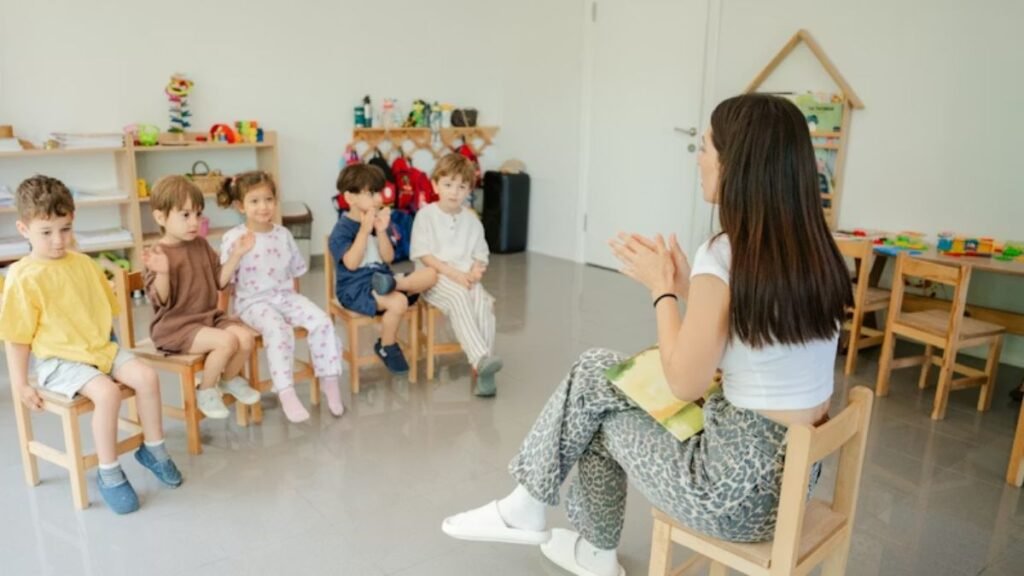
- Clap your hands and encourage your child to clap along.
- Raise arms, wave, or tap on the table.
- Use songs with motions like “pat-a-cake” to add rhythm and fun.
Short, repetitive gestures are easier for children to copy and help build early imitation.
2. Object-Based Imitation
- Stack blocks and invite your child to copy.
- Roll a car across the floor and pause for your child to do the same.
- Tap a drum or shake a maraca together.
Using toys makes the activity more engaging and ties imitation to play.
3. Daily Routine Imitation
- Pretend to brush teeth and hand your child a toothbrush.
- Wash hands together, exaggerating each step.
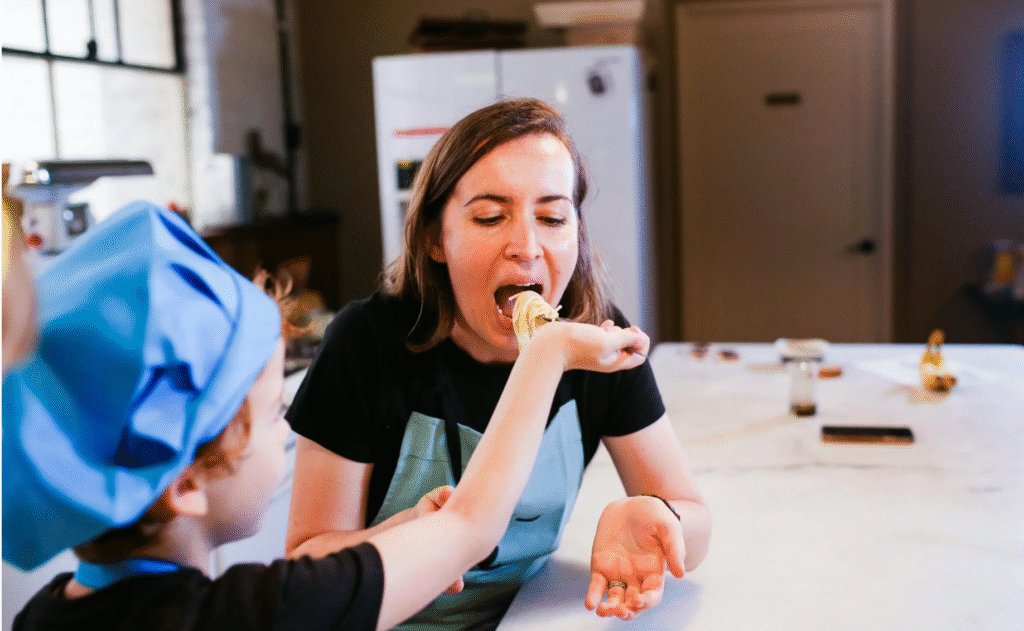
- Put on shoes or hats in front of your child to encourage copying.
Routine-based imitation builds independence and reinforces practical life skills.
4. Facial Expressions and Gestures
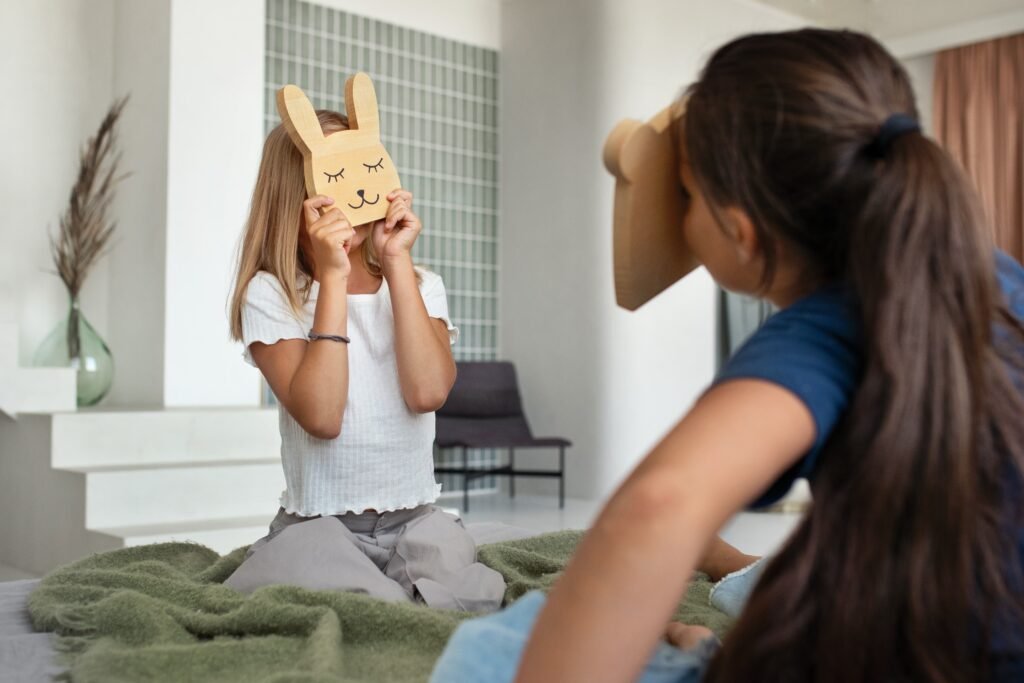
- Smile, stick out your tongue, or make a funny face.
- Use simple gestures like thumbs up or blowing a kiss.
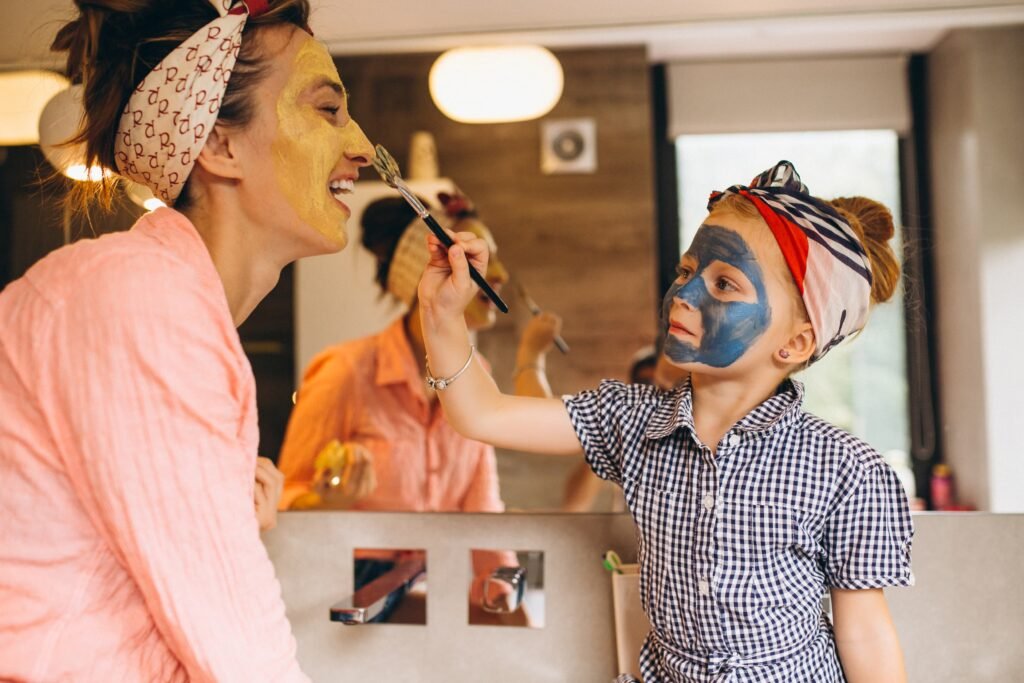
- Play “mirror” games where your child mimics your face.
These activities support both emotional understanding and social bonding.
5. Vocal Imitation and Sounds
- Start with fun noises like “ahh,” “oo,” or animal sounds.
- Encourage copying of single syllables before moving to words.
- Use music or rhymes to keep practice enjoyable.
Vocal imitation lays the foundation for language development and conversation.
6. Imitation Through Play Games
- “Simon Says” with very simple commands.
- Copy dance moves during music play.
- Turn-taking games that involve repeating actions.
Structured play makes learning feel natural and less like a lesson.
Tips for Success When Teaching Imitation
Start Simple and Build Gradually
Begin with easy actions your child can succeed with. Slowly increase complexity as confidence grows.
Use Reinforcement
Praise, smiles, or a favorite toy can motivate children to try again. Immediate positive reinforcement works best.
Incorporate Interests
If your child loves trains, use train toys for imitation. If they enjoy music, use instruments. Connecting activities to interests keeps attention longer.
Practice in Short Sessions
A few minutes of focused imitation practice multiple times a day is more effective than one long session.
Model Repeatedly
Children with autism may need to see an action many times before imitating. Patience and repetition are key.
Create Opportunities in Daily Life
Imitation doesn’t only happen in therapy. Parents can turn everyday moments like cooking, cleaning, or playing outside into practice opportunities.
Structured vs. Naturalistic Imitation Activities
Both structured and natural approaches are useful in teaching imitation.
- Structured activities: Step-by-step practice led by a therapist or parent, with clear expectations and prompts.
- Naturalistic activities: Spontaneous moments of imitation during play or routine, where the child copies without pressure.
A balanced combination helps children generalize imitation across different settings.
When to Seek Professional Support
While parents can do a lot at home, some children benefit from additional guidance. If your child consistently struggles with imitation despite repeated practice, ABA therapy may help. Therapists can break down skills, track progress, and use evidence-based methods to teach imitation more effectively.
The Path Forward for Imitation Skills
Imitation activities for autism are not one-size-fits-all. Children progress at different paces, and flexibility is important. Starting with simple movements, moving to object use, and then incorporating language and social play creates a path toward growth. Consistency, reinforcement, and making activities fun are key to success.
Helping your child build imitation skills is a journey, and professional support can make a difference. At Glow Forward, we provide ABA therapy in Maryland and North Carolina to support children in developing imitation, communication, and social skills. Our team at Glow Forward works with families to create personalized strategies that fit daily life and encourage lasting progress.
If you’re ready to give your child the tools they need to thrive, reach out today to learn more about how ABA therapy can support your family.