Key Points:
- Autism is not classified as a language disorder, but many children with autism experience overlapping communication challenges.
- Language delays in autism differ from those in standalone language disorders due to differences in social use and intent.
- Targeted therapies like ABA can help children with autism improve both verbal and nonverbal communication skills.
When parents first notice that their child isn’t speaking or engaging with others like their peers, it can raise many questions. Is it just a speech delay? Is it a language disorder? Or could it be autism? These questions often come with worry and uncertainty, and many parents find themselves searching online for answers like, “Is autism a language disorder?”
Understanding the connection between language disorders and autism can help parents better navigate early intervention options and get the support their child needs. In this article, we’ll explore how autism impacts language development, how it differs from other types of language disorders, and what steps families can take to support their child’s communication growth.
What Are Language Disorders?
Language disorders are conditions that affect a person’s ability to understand, process, or use spoken or written language. These can appear in early childhood and often persist without the right support.
There are two main types:
- Receptive language disorder: Difficulty understanding what others are saying.
- Expressive language disorder: Difficulty expressing thoughts or ideas verbally.
Some children may have both, which can lead to significant communication struggles. Importantly, language disorders can occur in isolation, meaning a child could have a language disorder without having autism or any other developmental condition.
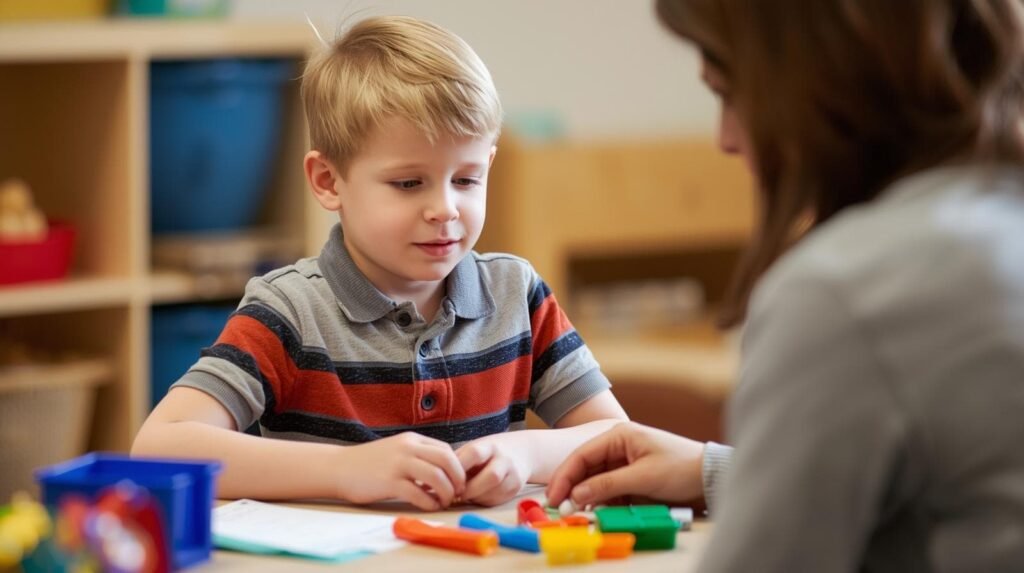
Is Autism a Language Disorder?
This is a common and understandable question. The short answer: No, autism is not a language disorder. Autism, or Autism Spectrum Disorder (ASD), is a neurodevelopmental condition that affects how a person communicates, interacts socially, and processes sensory information.
However, many children with autism experience language delays or differences, which is why the two are often confused. These communication challenges can range from mild speech delays to complete nonverbal presentation.
Here’s where the confusion often arises:
- Language delays are one of the early signs of autism.
- Children with autism may also have a co-occurring language disorder.
- Communication challenges are central to autism diagnosis.
Because of this overlap, it can be hard to distinguish between the two without a full developmental evaluation.
How Autism Affects Language and Communication
Language difficulties in autism are unique because they aren’t just about vocabulary or grammar; they’re about how language is used socially. This includes how children initiate conversations, understand social cues, and respond to others.
Common Language-Related Features in Autism
Children with autism may show:
- Delayed speech development.
- Limited use of gestures or eye contact.
- Echolalia (repeating words or phrases).
- Difficulty understanding abstract language or sarcasm.
- Trouble with back-and-forth conversation.
- Literal interpretation of language.
These challenges are not always due to an inability to understand or use words. Instead, they often reflect difficulty with pragmatic language or the social rules of communication.
Differences Between Autism and Standalone Language Disorders
It’s crucial to understand how autism differs from language disorders, even though the two can look similar in young children.
Key Differences
- Intent of Communication: Children with language disorders usually want to engage and communicate, but may struggle with the mechanics. In contrast, children with autism might not initiate communication at all or may seem indifferent to social interaction.
- Social Reciprocity: Children with autism often struggle with give-and-take interactions. Language disorders typically don’t affect social interest to the same degree.
- Play and Imagination: Many children with language disorders engage in pretend play, while children with autism may show repetitive or limited play interests.
- Consistency of Challenges: Language disorders tend to follow a more consistent pattern of delay, while language use in autism can be uneven, advanced in some areas, delayed in others.
Understanding these distinctions helps clinicians and therapists recommend the right therapies and interventions.
Co-Occurrence: Can a Child Have Both Autism and a Language Disorder?
Yes, it’s entirely possible for a child to have both autism and a language disorder. In fact, some studies suggest that up to 63% of children with autism also meet criteria for a language disorder.
When both conditions are present, it can make diagnosis more complex, but it also highlights the need for a multidisciplinary approach to therapy that includes speech-language pathologists, behavioral therapists, and developmental specialists.
When to Seek a Developmental Evaluation
If you’re unsure whether your child’s speech delay is due to autism, a language disorder, or both, early evaluation is key. The following signs may indicate the need for a comprehensive developmental assessment:
- Your child is not speaking by age 2.
- Your child doesn’t respond to their name.
- There’s little to no eye contact or social smiling.
- Your child repeats phrases without meaning (echolalia).
- Limited use of gestures like pointing or waving.
- Unusual tone of voice or speaking pattern.
Even if it turns out not to be autism, early intervention for language challenges can still make a significant impact on your child’s development.
How Language Therapy and ABA Work Together
For children with autism, Applied Behavior Analysis (ABA) therapy and speech-language therapy often go hand in hand. These two services focus on different aspects of communication but can reinforce each other in meaningful ways.
Speech-Language Therapy Focuses On:
- Vocabulary building.
- Grammar and sentence structure.
- Listening and comprehension.
- Speech articulation.
ABA Therapy Can Support:
- Motivation to communicate.
- Functional communication training (FCT).
- Generalization of skills across environments.
- Reduction of behaviors that interfere with communication.
Together, these approaches help children not only learn how to speak but also why and when to speak, something that’s especially important in autism.
Supporting Communication at Home
Parents and caregivers play a crucial role in language development. Regardless of whether a child has autism, a language disorder, or both, everyday interactions are rich opportunities to promote growth.
Here are a few tips for home support:
- Follow your child’s lead: Talk about what your child is interested in at the moment.
- Model simple language: Use short, clear phrases and repeat them often.
- Pause and wait: Give your child time to respond. Avoid filling every silence.
- Use visuals: Visual supports like pictures or simple gestures can help bridge understanding.
- Celebrate effort: Even attempts at communication should be praised.
These small steps can go a long way in helping your child feel more confident and motivated to communicate.

Language and Autism Are Connected, But Not the Same
While many children with autism face language challenges, autism is not the same as a language disorder. Autism involves a broader set of social and behavioral characteristics, with communication being just one part. Recognizing the difference is crucial in ensuring children receive targeted, effective interventions.
If your child is showing signs of language delay, especially when combined with social or behavioral differences, it’s worth considering a developmental evaluation. This is the first step in determining whether autism, a language disorder, or both may be present, and more importantly, how best to support your child’s communication journey.
Discover How ABA Therapy Can Support Your Child’s Communication
If you’re looking for effective ways to support your child’s language development and social communication, explore the benefits of ABA therapy with Glow Forward. Our team specializes in providing ABA therapy in Maryland and North Carolina, focusing on practical communication skills and behavior strategies tailored to each child’s needs.
Whether your child is facing language delays, has been diagnosed with autism, or is somewhere in between, our ABA programs at Glow Forward help build meaningful connections through evidence-based techniques.
Take the first step toward empowering your child’s communication growth. Contact us today to learn more about our ABA therapy services in North Carolina and Maryland.