Key Points:
- Non-verbal doesn’t mean non-communicative: children can understand language and express themselves through gestures or AAC tools.
- Early intervention matters: ABA therapy with AAC supports communication, social skills, and independence.
- Consistency drives success: Consistency helps children build stronger communication skills across home, school, and community settings. Families looking for ABA therapy in North Carolina can turn to Glow Forward ABA for support with communication, independence, and daily skill building.
Understanding Verbal and Non-Verbal Autism
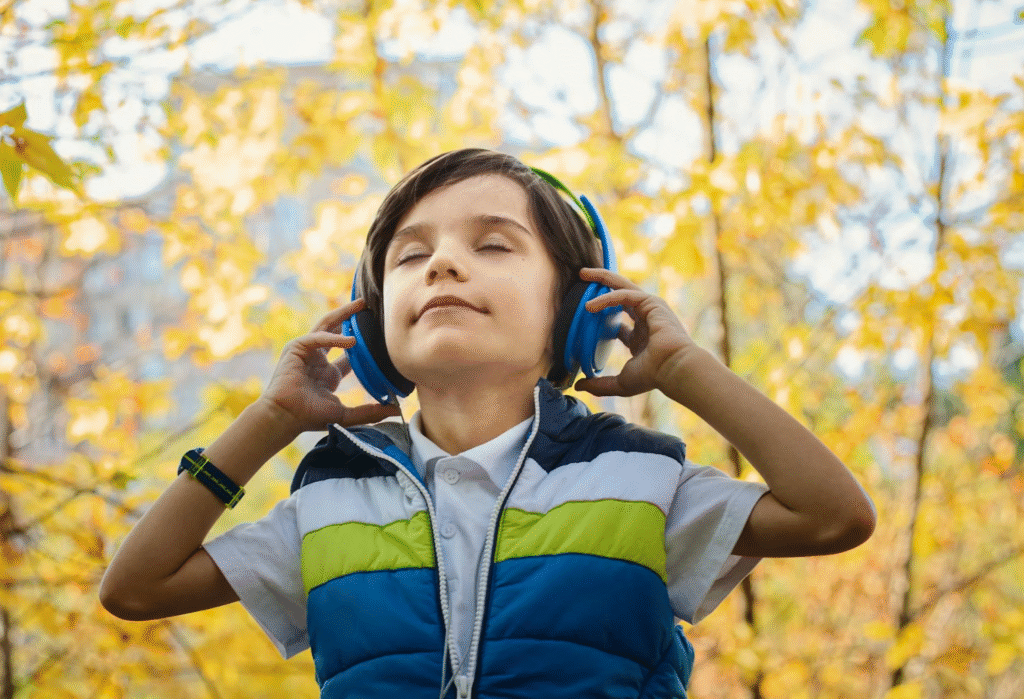
Autism Spectrum Disorder (ASD) presents with a wide range of communication styles and abilities. Some autistic individuals are verbal, meaning they use spoken language, while others are non-verbal (or non-speaking) and rely on alternative methods of communication.
Children with non-verbal autism are fully capable of understanding and communicating, even if they do not use spoken language.
Non-verbal individuals can have high intelligence, though traditional language-based tests often fail to reflect their cognitive abilities. Non-verbal episodes are frequently linked to sensory overload, which can result in temporary shutdowns or withdrawal.
Research highlights that early speech and language intervention, ideally before age five, is critical, though some children may develop verbal skills later in adolescence. Understanding these differences is key for parents, caregivers, and therapists who are teaching nonverbal children to communicate.
Verbal Autism (Speaking)
Communication Style
Verbal autism refers to individuals who use spoken words and sentences to communicate. However, they may face challenges with the “back-and-forth” nature of conversation, understanding social cues, body language, or tone of voice.
Speech patterns may sometimes be pedantic, repetitive, or unusually formal, making social interactions more complex.
Non-Verbal / Non-Speaking Autism
Non-verbal children with autism do not use spoken language to express needs, thoughts, or emotions. Many use gestures, technology, or picture-based systems to communicate.
Common Misconceptions
The term “non-speaking” is increasingly preferred over “non-verbal” to emphasize that these individuals do communicate, just not through speech. Nonverbal autistic children may also become temporarily nonverbal during times of high stress or sensory overload.
Core Communication and Social Symptoms of Nonverbal Autism
Non-verbal autism often includes developmental, social, and sensory differences.
Key indicators include:
- Speech and language delays: Not speaking, limited use of single words, or losing previously acquired language skills
- Lack of pointing or gestures: Failing to point by 14 months or use gestures like waving by 18 months
- Poor eye contact: Avoiding eye contact or displaying few facial expressions
- Not sharing interest: Failing to bring items to share or show interest in objects or activities
- Poor social interaction: Preferring to be alone or appearing in their own world
- Repetitive behaviors (stimming): Rocking, spinning, or hand-flapping
- Routine rigidity: Distress over minor changes in routines or environment
- Sensory issues: Strong reactions to specific textures, sounds, or lights
- Play behaviors: Focusing on parts of toys (e.g., spinning wheels) rather than imaginative play
Non-Verbal Autism: Early Indicators of Non-Verbal Autism (0–24 Months)
When early signs appear, autism assessment and diagnostic support can help families understand their child’s needs and take the next step toward therapy, school support, and a clear care plan. Key early signs include:
Communication Delays
- Limited or no babbling or cooing by 12 months
- No single words by 16 months or two-word phrases by 24 months
- Loss of previously acquired speech or social skills
Social Interaction Challenges
- Minimal smiling or emotional expression
- Lack of response to their name by 9–12 months
- Limited or no eye contact
- Difficulty with joint attention, such as not pointing to show interest or following others’ gestures
Non-Verbal Expression
- Rarely waving goodbye or using gestures to request items
- Minimal imitation of caregivers’ actions
Behavioral and Sensory Indicators
- Repetitive behaviors like hand-flapping, rocking, spinning, or intense focus on certain objects
- Strong reactions to sounds, lights, textures, or smells
- Limited pretend or imaginative play, such as not imitating adult routines (e.g., brushing hair)
Recognizing these early indicators allows parents and caregivers to seek interventions, such as ABA therapy for nonverbal autism, to support communication, social engagement, and adaptive skills.
Augmentative and Alternative Communication (AAC) in ABA Therapy: Strategies for Non-Verbal Autism
Augmentative and Alternative Communication (AAC) is a set of tools and strategies that help individuals with limited or non-verbal communication express themselves. It can be used by anyone, at any age, without prerequisites, to support a wide range of communication, including requesting, commenting, greeting, and sharing thoughts or feelings.
Combining Augmentative and Alternative Communication (AAC) with Applied Behavior Analysis (ABA) therapy provides non-verbal or minimally verbal individuals with effective tools, such as speech-generating devices or picture boards, to improve communication.
This integrated approach supports language development, fosters independence, and enhances social interaction, while ABA ensures consistent use of AAC across all environments.
The dual approach reinforces social interactions and reduces frustration, helping children practice requesting, commenting, greeting, and sharing thoughts or feelings in everyday situations.
Key approaches include:
- Visual Supports: Picture cards, symbol boards, and visual schedules help children understand routines and reduce anxiety
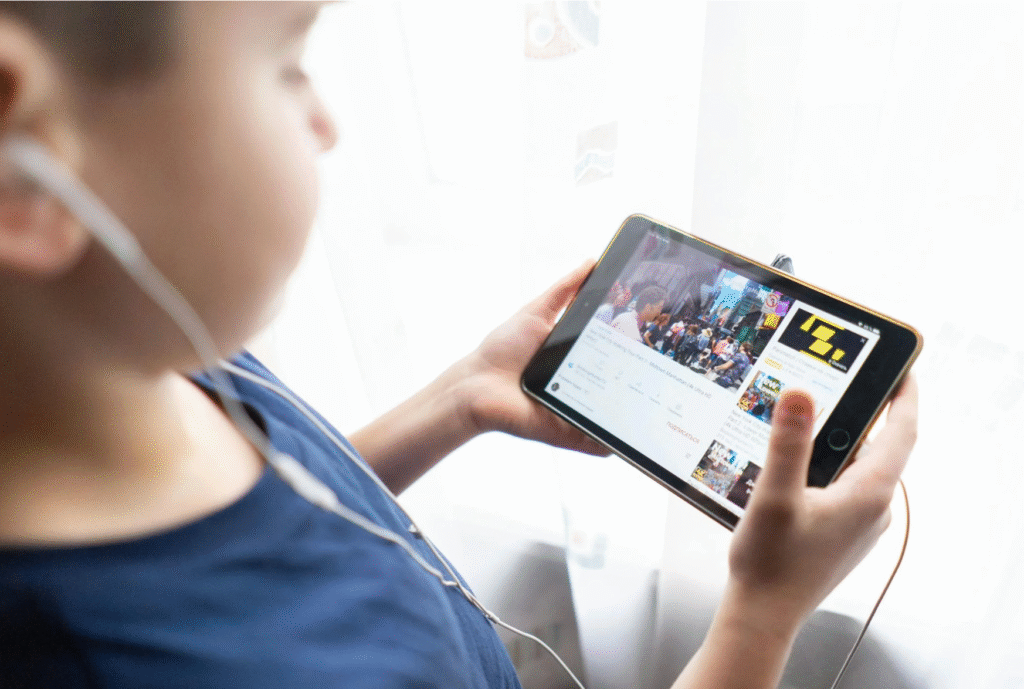
- Assistive Technology: Speech-generating devices (SGDs) or tablet apps allow children to produce spoken words via images or text
- Sign Language & Gestures: Teaching practical signs or encouraging consistent gestures like pointing
- Modeling & Imitation: Mimicking the child’s sounds or play behaviors encourages social engagement
- Creating Opportunities: Placing desired items out of reach encourages communication attempts
Interaction Techniques
- Reduce verbal pressure and allow ample processing time (5–10 seconds)
- Communicate face-to-face, at or below the child’s eye level
- Use play-based activities like music, playdough, and sensory play to teach communication
- Communication passports can highlight an individual’s preferred communication methods, likes, and dislikes
Focusing on Non-Verbal Cues
- Observe body language and facial expressions for emotional states
- Recognize “pop out” words or vocal approximations that may indicate emerging speech

ABA Therapy for Non-Verbal Autism
Integrating AAC with ABA allows children to develop meaningful communication skills across environments, from home to school.
Common ABA Strategies Used to Prompt Communication
- Functional Communication Training (FCT): Teaching alternative ways to communicate needs
- Augmentative Communication Integration: Using PECS or tablet apps to provide a voice
- Positive Reinforcement: Encouraging communication attempts through praise and rewards
- Discrete Trial Training (DTT): Breaking complex skills into small, structured steps
- Natural Environment Teaching (NET): Practicing skills during daily routines and play
- Improving Nonverbal Cues: Teaching gestures, facial expressions, and body language for social engagement
Techniques Used
- Video modeling of expected behaviors and social cues
- Prompting and fading: guiding a child’s gestures or vocalizations, then gradually reducing assistance
- Pairing sounds with items to encourage verbal imitation
- High-tech devices, like LAMP Words for Life, for speech generation
Examples of Integrating AAC with ABA Therapy
Integrating Augmentative and Alternative Communication (AAC) with Applied Behavior Analysis (ABA) therapy allows non-verbal or minimally verbal individuals to develop functional communication skills. These strategies range from low-tech to high-tech applications:
1. Requesting (Manding) in Natural Settings
ABA teaches communication through reinforcement, while AAC provides the tools.
- Home Example: During in-home ABA therapy, a child who wants a cookie can learn to use a PECS card instead of crying or throwing a tantrum. The parent or therapist prompts the child to hand over the card, then immediately provides the cookie and praise to strengthen the connection between communication and the desired item.
2. Replacing Challenging Behaviors (Functional Communication Training, FCT)
FCT uses ABA to replace problem behaviors with appropriate communication.
- Example: A child screams to stop a task. The therapist models how to use a “Break” card or a “Stop” button on their AAC device. Once the child requests a break correctly, it is immediately provided, reducing tantrums.

3. Generalization Across Environments
Skills learned with AAC should extend beyond therapy sessions into daily life.
- Playtime Example: During a game, the therapist encourages the child to use their AAC device to say “My turn” or “Go” instead of simply taking the toy.
- Community Example: At a grocery store, a parent encourages the child to point to a picture of an item on a low-tech communication board to request it, ensuring the skill works outside the home.
4. Social Interaction and Play
AAC supports engagement in conversation, not just requesting items.
Home Example: At dinner time, the child uses their AAC device to ask for more chicken nuggets, saying: “more please” and “it is yummy”, allowing them to interact with parents rather than only request items.
Key Components for Success
- Parent training and support: Parents and therapists model AAC use during daily routines, helping the child see how the device or picture system can be used to request, respond, and interact.
- Positive Reinforcement: Any attempt to use the AAC tool is immediately reinforced to encourage communication.
- Consistency: The same AAC system should be used at home, in therapy, at school, and in the community to strengthen skill retention.

Benefits of AAC and ABA Therapy
- Reduced frustration and behavioral outbursts through clear communication
- Support for speech development, often acting as a bridge to verbal language
- Enhanced social connections, fostering interaction with peers and caregivers
- Improved academic and life skills, increasing independence
- Versatility in communication with both low-tech and high-tech solutions
Find Non-Verbal Autism Support in Maryland and North Carolina
Families in Maryland and North Carolina seeking nonverbal autism therapy can turn to Glow Forward ABA Therapy for expert support.
Our ABA therapy programs integrate AAC tools to teach functional communication, enhance expressive and receptive language, reduce frustration-based behaviors, and foster independence in daily life.
Non-verbal or non-speaking autism requires specialized communication strategies and consistent support. We help children communicate effectively, participate socially, and grow in social and daily living skills through structured, positive approaches.
Get started with Glow Forward ABA Therapy today to empower your child in communication and independence.
FAQs
1. What is non-verbal autism?
Non-verbal autism, also called non-speaking autism, refers to individuals on the autism spectrum who do not use spoken language to communicate. They may rely on gestures, picture-based systems, or speech-generating devices to express their needs, thoughts, and emotions.
2. Can non-verbal children understand language?
Yes. Many non-speaking autistic children have strong receptive language skills, meaning they understand spoken language even if they cannot respond verbally. AAC tools help them express what they understand.
3. How does ABA therapy help non-verbal children communicate?
ABA therapy nonverbal autism programs use strategies like Functional Communication Training (FCT), Discrete Trial Training (DTT), and Natural Environment Teaching (NET). These approaches teach children to communicate functionally through AAC tools, gestures, or vocalizations while reinforcing social and adaptive skills.
4. What are Augmentative and Alternative Communication (AAC) tools?
AAC tools include low-tech options like PECS (Picture Exchange Communication System) or symbol boards, and high-tech devices such as speech-generating tablets or apps. They provide nonverbal children with a way to express themselves clearly.
5. How do parents support communication at home?
Parents can reinforce communication skills by:
- Modeling AAC use in everyday activities
- Consistently using the same AAC system across environments
- Providing positive reinforcement for all communication attempts
- Creating opportunities for the child to request items, interact socially, or participate in play
6. When should I seek therapy for my non-verbal child?
Early intervention is crucial. Signs such as limited babbling, no gestures by 12–14 months, lack of eye contact, or regression of speech/social skills indicate that families should seek evaluation and support, including ABA therapy for nonverbal autism.
7. Does using AAC prevent speech development?
No. Research shows that AAC and ABA therapy do not interfere with speech. Instead, it often acts as a bridge, supporting language development while providing children with functional ways to communicate.