Key Points
- School refusal due to autism is rarely defiance. Glow Forward ABA identifies the real triggers behind school avoidance to get to the root cause.
- Sensory overload, anxiety, and routine changes commonly drive autistic children to refuse school NC, and we create practical, child-centred support plans for each.
- ABA therapy in North Carolina with us can help build real-life coping skills children can use daily, with support for both children and parents throughout the process.

Is your child with autism refusing school and making mornings feel like an ongoing battle? You’re not alone.
Many families across Charlotte, Raleigh, and surrounding communities are facing the same exhausting morning struggles, and there is meaningful, structured support available.
What School Refusal Actually Looks Like in Autistic Children
School refusal in autism rarely looks like a simple “no, I’m not going.” For families navigating an autistic child refusing school NC, the signs are often subtle at first and build over time.
Common signs include:
- Recurring stomach aches, headaches, or nausea on school mornings
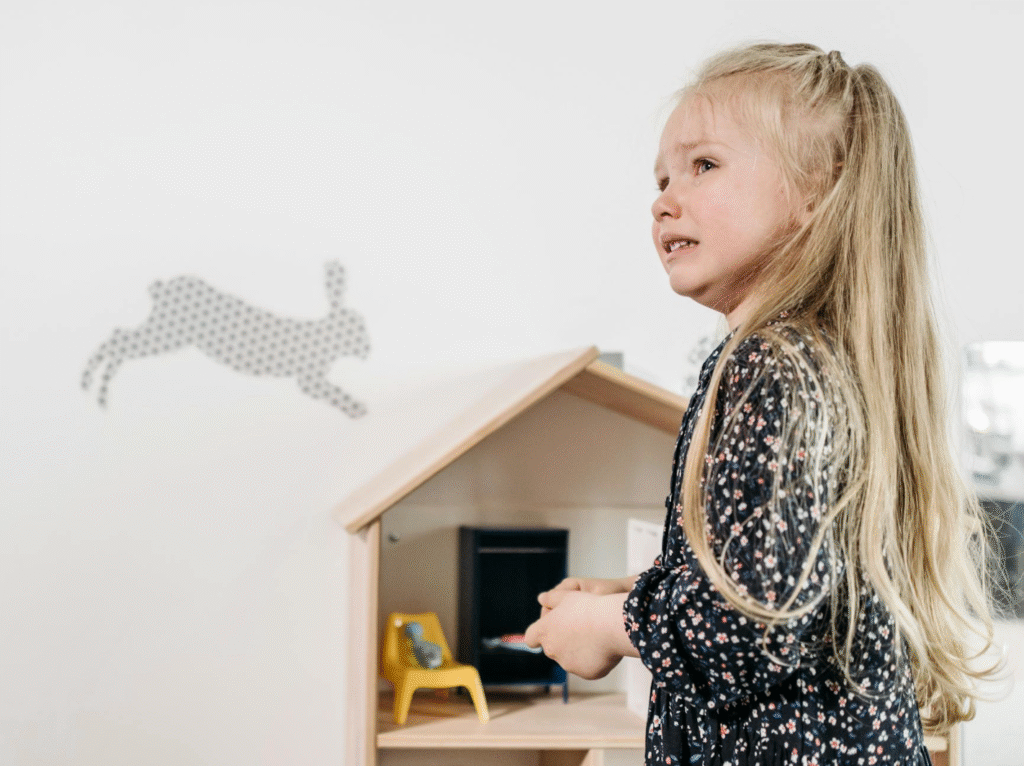
- Emotional meltdowns or shutdowns before leaving home
- Increasing distress the night before school
- Bargaining or promising to attend “tomorrow”
- Requests to go home early or frequent visits to the school nurse
These behaviours are communication, not defiance. They often signal sensory overwhelm, anxiety, or emotional exhaustion that a child cannot yet put into words.
Common Triggers Behind School Avoidance in Autism
Understanding triggers is the foundation of effective autism school support strategies that North Carolina families can use.
Autistic children frequently experience:
- Sensory overload from noise, fluorescent lighting, crowded hallways, or unpredictable smells
- Unpredictable schedule changes, such as substitute teachers, fire drills, or altered routines
- Difficulty with social interactions and the unwritten rules of peer dynamics
- Transition stress moving between the predictable home environment and the demands of school
These challenges are especially common in autism school anxiety Charlotte NC cases, where busy, stimulating school environments can feel overwhelming from the moment a child walks through the door.
Why School Avoidance Gets Worse Over Time
With school avoidance autism Raleigh NC, a reinforcing cycle often develops:
- School feels overwhelming
- The child stays home
- Staying home provides immediate relief
- That relief reinforces the avoidance
- Returning to school feels increasingly harder each time
This is not behavioural noncompliance; it is anxiety reinforcement. The longer the pattern continues, the more entrenched it becomes.

How ABA Therapy Supports School Refusal in Autism
ABA therapy school refusal North Carolina approaches focus on identifying why a behaviour is happening, then building practical, functional replacement skills that give children real tools to manage school environments.
At Glow Forward ABA, support may include:
- Functional behaviour assessments to identify the specific triggers driving school avoidance
- Gradual exposure strategies tailored to the child’s individual tolerance level
- Emotional regulation and coping skill development
- Predictable routines built around visual schedules and clear expectations
- Positive reinforcement systems that reduce school-related fear over time
For many families working on helping an autistic child go to school in NC, this structured, step-by-step approach makes school feel manageable rather than overwhelming.
In-home ABA therapy is especially effective when a child is experiencing severe distress and cannot yet tolerate school-based intervention. Starting in a safe, familiar environment builds the foundation for eventually transferring those skills into the school setting.
ABA Strategies in Action: Real Examples for School Refusal
Understanding how autism school support strategies works in practice helps families know what to expect. Here is what ABA strategies actually look like when applied to school refusal:
Gradual Exposure
Rather than forcing a full return to school overnight, an ABA therapist might begin by having a child simply drive past the school building each morning without going inside. Over time, steps gradually increase, such as sitting in the car park, walking to the entrance, and entering the building briefly until the child can tolerate a full school day.
Example: A nine-year-old in Raleigh with autism and school anxiety was refusing to go to school after a fire drill caused a meltdown. An ABA therapist reintroduced the school environment through short, low-pressure visits after hours paired with preferred activities. Within six weeks, he was attending morning classes consistently.

Visual Schedules and Predictability
One of the most powerful autism school support strategies North Carolina families can use is reducing uncertainty. Visual schedules show exactly what will happen during the morning and school day.
Example: A seven-year-old in Charlotte had severe Monday morning meltdowns. A visual weekend-to-school schedule outlining Sunday evening and Monday morning routines reduced distress within two weeks.
Functional Communication Training
Many children engage in school refusal because they cannot explain what is wrong. ABA teaches children to communicate internal states such as feeling overwhelmed or needing a break.
Example: A ten-year-old refusing morning drop-offs learned to use a feelings card. Once he could signal “overwhelmed,” staff adjusted transitions, and car-based refusals decreased significantly.
Reinforcement Systems
ABA therapy uses reinforcement to build positive associations with school attendance.
Example: A child with autism school anxiety earned tokens for each step of the morning routine. These were exchanged for a preferred sensory activity at school. Within three weeks, she began entering the building independently.
Coping Skill Scripts and Anxiety Tools
Children are taught personalised strategies they can use when anxiety spikes at school, such as breathing techniques, break requests, or sensory tools.
Example: A twelve-year-old in Raleigh used a three-step self-regulation script: stop, breathe, ask for a break. Early exits from school dropped significantly within a month.

The Role of Parent Training in School Refusal
Our parent training service is one of the most powerful parts of ABA support for school refusal, autism, and North Carolina families.
Through parent training, Glow Forward ABA helps you:
- Understand what is driving school refusal behaviours
- Respond in ways that reduce anxiety instead of reinforcing avoidance
- Build consistent morning routines
- Use practical strategies during high-stress moments
Many parents find that once they understand the function behind behaviour, mornings become more manageable, not because the child suddenly changes, but because the environment and responses shift in a meaningful way.
FAQs
1. My child is refusing to go to school in North Carolina. Where do I start?
Start by identifying the cause. For school refusal due to autism in North Carolina, this usually involves anxiety, sensory overload, or transitions. A functional behaviour assessment can help clarify the next steps. Contact us for an assessment.
2. Is in-home ABA helpful for school refusal?
Yes. In-home support is often the best starting point for helping an autistic child go to school in NC, especially when school feels too overwhelming initially.
3. How long does ABA take to work for school refusal?
It varies. Some families see changes within weeks, while others with more entrenched school avoidance autism patterns need longer-term support.
4. Is it behaviour or anxiety?
Often both. In autism school anxiety cases, anxiety often presents as behaviour because children cannot express internal distress clearly.
5. Does telehealth support exist?
Yes. ABA telehealth services are often used for parent training and early-stage ABA therapy, school refusal, and support in North Carolina. Contact us to start online ABA therapy.
Getting Support for School Refusal in Autism
If you are navigating school refusal autism in North Carolina, it can feel like every morning is a struggle, but it does not have to stay that way.
Glow Forward ABA offers personalised, family-centred care designed to support your child’s needs at home and beyond, helping build real progress toward consistent school attendance and emotional regulation.
Contact us to create an individualised plan that helps your child feel supported, confident, and able to thrive during their most challenging moments: +1 (888)-943-4684.